
By MYMOVE
Even though moving is often an exciting time, the transition can be a considerable challenge. From choosing the right to buying a new home and finding the right neighborhood, moving is stressful enough as it is. Adding kids into the mix can present even more challenges.
The thought of saying goodbye to friends, leaving your home for a new one, and being the 鈥榥ew kid鈥� can be overwhelming for children. And the stress your child might experience can make the moving process as a parent even more difficult.
But with the right approach, moving doesn鈥檛 have to be a negative experience for your kids. Here are some tips that will help make moving with kids a little smoother.
How relocation affects your kids
Change as a result of moving can be hard on everyone, but studies show it鈥檚 particularly difficult for young teens.
One study found that moving schools when you鈥檙e 12-14 years old significantly increase the chance of substance abuse and violent behavior 鈥� even controlling for income and psychiatric history.
This is mostly because kids in this age group are already dealing with significant changes. So, the added stress of upheaval in their social lives can be a lot to handle. If your kids are around this age, pay close attention to how they鈥檙e coping with the move.
Research shows that kids under 8 showed a minimal increase in risk for negative behaviors. But they still need help with the significant changes that a move brings 鈥� it will just look a little different.
Here are tips on how to help your kids transition during the moving process, which will 鈥� in turn 鈥� move easier on yourself, too.
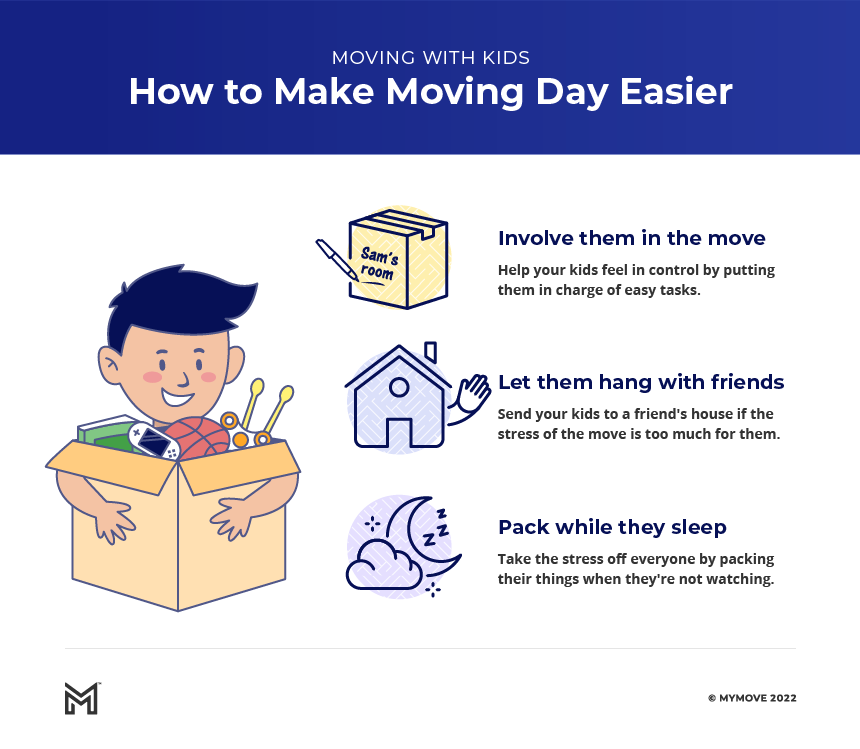
How to prepare your kids for the move
Learning that they鈥檙e going to move is often hard news for kids because they don鈥檛 have control over the change. So, one of the keys to helping your kids through the transition is helping them feel like they have a sense of control.
According to the framework for behavioral change by , that can 鈥� and should 鈥� start before the move occurs.
The time before a change happens falls into what鈥檚 known as the 鈥減re-contemplation stage.鈥� This is the time when a person is resistant to change, but is aware that it needs to happen. And according to Prochaska, giving the child a reason to embrace the change or instilling the proper motivation to make the transition is key.
With your kids during a move, that often means helping them see the change in a positive light. Here are 10 tips for helping them do so:
Keep in mind that every kid is different, so finding what helps your child with the transition is crucial. That鈥檚 why regularly talking about the move is so important 鈥� it enables you to stay close to what they鈥檙e struggling with, so you can help.
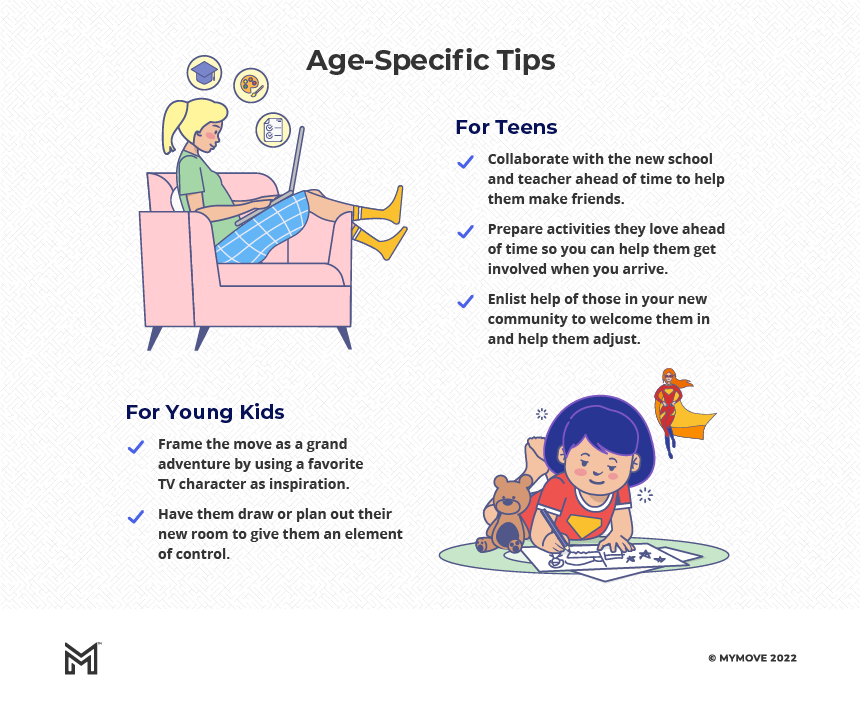
Moving by the ages
The upheaval of a 草莓短视频app move affects everyone regardless of age. Each person in your 草莓短视频app will need your support in different ways, too.
Babies and toddlers
You鈥檒l definitely have your hands full if you鈥檙e moving your home while having a baby or a toddler in tow.
This can be a scary time for them too because everything they鈥檝e ever known is being changed. Make time for hugs and reassurance, making the reason you鈥檙e moving very simple, and keep their favorite things nearby: toys, books, food, and clothes. Try to keep your routines intact as much as possible for mornings, bedtimes, meals, etc.
Preschoolers
This is the age of the question 鈥� so many questions! Embrace that and let your preschooler know why you鈥檙e moving, where to, and that their room will be the first you set up (and keep that promise), let them help as much as possible, but also let them play and safely explore their new surroundings.
Parents magazine to help your preschoolers get comfortable with their new normal.
School-age kids
From K-12, this is the age span for honest and straightforward talk about the move, put into terms each age group can understand, of course. The theme remains the same of providing affection, reassurance, and help with their transition.
For teens, make sure they have activities they love to keep them engaged. At this age, friendships are critical, so it鈥檚 up to you to facilitate ways that they can keep in touch with those friends they are leaving behind. This can be through email, video chats, meeting up if you haven鈥檛 moved too far away and more.
School will be the hardest adjustment for kids of any age. They鈥檝e most likely left their friends and they鈥檝e definitely left their comfort zone. Work with their new school for ways to help them make friends and get involved in school events. Visit the school together to tour the grounds and meet staff and students, if possible.
The biggest takeaway a parent of a school-age child can have during all stages of the move is to listen to your child 鈥� what they say as much as what they aren鈥檛 saying to you. Ask leading questions with examples that require more than a yes or no answer. 鈥淗ey, what are you worried about with your school? Friends, clothes, food, the bus ride 鈥�?鈥�
The biggest takeaway a parent of a school-age child can have during all stages of the move is to listen to your child 鈥� what they say as much as what they aren鈥檛 saying to you. Ask leading questions with examples that require more than a yes or no answer. 鈥淗ey, what are you worried about with your school? Friends, clothes, food, the bus ride 鈥�?鈥�
Activity book for kids
Download to keep your children engaged and busy.
Involve your child in the move from the beginning
Depending on their age, of course, it鈥檚 smart to keep your kids in the loop about your moving plans, so nothing comes as a surprise and they have time to mentally and physically prepare for it.
鈥淥ne of the things that troubles kids most during the move is that they don鈥檛 have any control over their environment,鈥� says Jacey Eckhart, a military sociologist who is the Director of Spouse and Family Programs at .
Consider taking your child with you when visiting a prospective apartment complex or any new homes you are interested in purchasing or renting. If they can鈥檛 join you, take videos or photos and share those with them later, asking their opinions on which place they like better and why.
Help them feel empowered by asking them their opinion on the place, which room would make a good bedroom for them, if there is enough outdoor space for their favorite sports or hobbies, etc.
How to help your child during the move
Your kids will typically feel one of two things on Moving Day 鈥� either they鈥檒l be excited about being part of the process, or they鈥檒l be sad to see their things removed from their home.
If you鈥檝e prepared them ahead of time, they will hopefully be in the first camp. In this case, giving them special tasks to accomplish, like making sure the movers have water or even putting them in charge of knowing where all the most important things are packed can go a long way to further a child鈥檚 sense of control over the situation.
that you can print and use to get them involved (and out of the way of the movers, at the same time):
Packing tips when moving with kids
Most kids can and will want to help with the actual process of moving. The boxes and tape will provide endless hours of fun for the smaller set, but your older children can handle the packing of their rooms and special items, with a bit of guidance from you.
It鈥檚 important they feel that they have some form of control over what is happening in their life right then. Give them a list of what to pack together, and help them create a 鈥渇irst-night鈥� box so they can easily get to pajamas, their toothbrush, pillows, blankets, a favorite sleeping buddy, etc.
For the younger kids, take the time to let them just play 鈥� boxes can be fuel for the imagination! Let them build forts or give them blankets, flashlights, and snacks to set up a 鈥渃lubhouse鈥� where they can retreat if things overstimulate them.
If you have multiple children, create a color-code system for their boxes and rooms, so there isn鈥檛 a lot of fighting over whose box has what inside it.
Here are a few additional tips to make Moving Day less stressful for everyone, even if you鈥檙e worried your kids won鈥檛 be excited about the process:
How to help your child feel stable after the move
When things are fresh, new, and unknown, anything you can do to help your kids find stability and familiarity in their new surroundings is key.
Something as simple as getting their room put together right away can go a long way to building a feeling of home and normalcy. Here are a few additional tips that will help you create that sense of stability in an unfamiliar location:
Many teachers say it takes children six weeks to adjust to their new class at school fully, so it will likely take the same to adjust to your new home as well. But keep in mind that some kids may take longer than others, depending on their personality.
Talk to your kids regularly about how they鈥檙e feeling, so you can be on top of any challenges they are facing (this is especially important with teens). Communication is key!
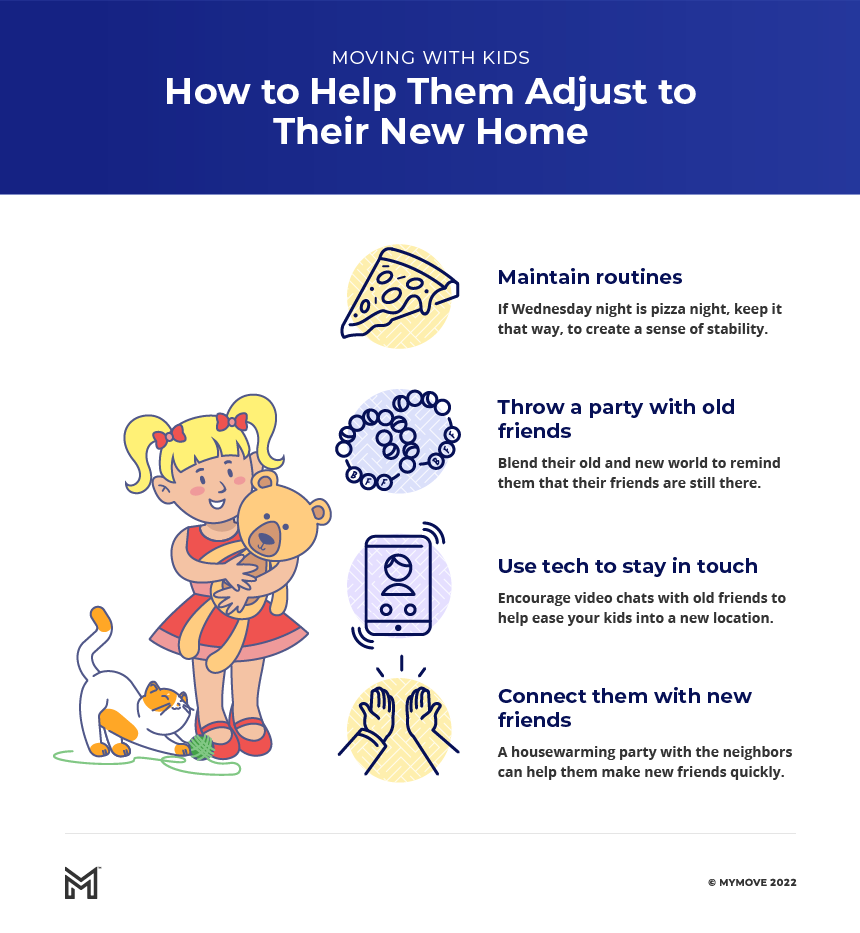
Helping your child cope with change
Just like adults, children can have pretty diverse reactions to big changes. Moving is an important time for children to be heard. You need to know their about this move so you can help them through it. Help them gain control over their feelings with some fun exercises from while you move:
- Have your children draw a picture of their new room and the new house.
- Let your child pack and label a box of their favorite things that they can access quickly at the new place.
- Set up your child鈥檚 bedroom first so they will be surrounded by familiar things.
- Give your child a camera and have them document the move. Once you arrive and are settled in, make time together to create a 草莓短视频app photo album or scrapbook.
- Read children鈥檚 books about moving.
- Read about more from Bright Horizons.
Moving with children with limitations
With the stress and thousands of details involved with moving, it鈥檚 good to stop for a minute and consider your child鈥檚 limitations during this life change.
If they use a wheelchair, keep accessibility in mind when looking at multi-unit dwellings like apartments and condos, as well as a home鈥檚 hallway space, stairs vs. elevators, and more.
If you are moving a long distance, prepare your route ahead of time to give your child adequate breaks from the long haul on the road. This includes staying the night in hotels or pre-arranging a stay with friends or 草莓短视频app. You鈥檒l want to make sure you have access to everything your child needs wherever you land for a break.
Moving with children with can bring another level of challenge to the transition. Moving itself is messy and your carefully planned schedules and structures will be going away until you get settled in your new place, so expect hitches like meltdowns from your kids. You can prepare for those by having easy access to things that comfort them and are familiar. Make sure to keep a 鈥渟afe鈥� place available 鈥� a quiet room or space they can decompress in.
What to do if you鈥檙e moving out of state with kids
Moving out of state creates an entirely new set of challenges if you have kids. There鈥檚 often a long drive or flight to your new home, and it鈥檚 very difficult (or unrealistic) to visit ahead of time to show your kids their new surroundings.
However, technology offers a solution. You can use Google Maps and Streetview to show your kids where they鈥檒l be living. This will help them visualize their new home, relieving some of the stress that comes with the 鈥渦nknown.鈥�
Additionally, if you鈥檒l be driving, you can also turn the road trip into an exciting adventure. Prepare road trip games ahead of time and tell your kids about all the cool things they鈥檙e going to get to see along the way.
More resources to make moving with kids easier
MYMOVE is here to help make moving easier. We鈥檙e an authorized affiliate of the USPS庐 that connects more than five million movers per year to exclusive savings and valuable resources before, during, and after their move.